The Evolution of Jackpot Mechanics in Slot Machines Under French Gaming Regulations
Finley Hartmann · Aug 28, 2026
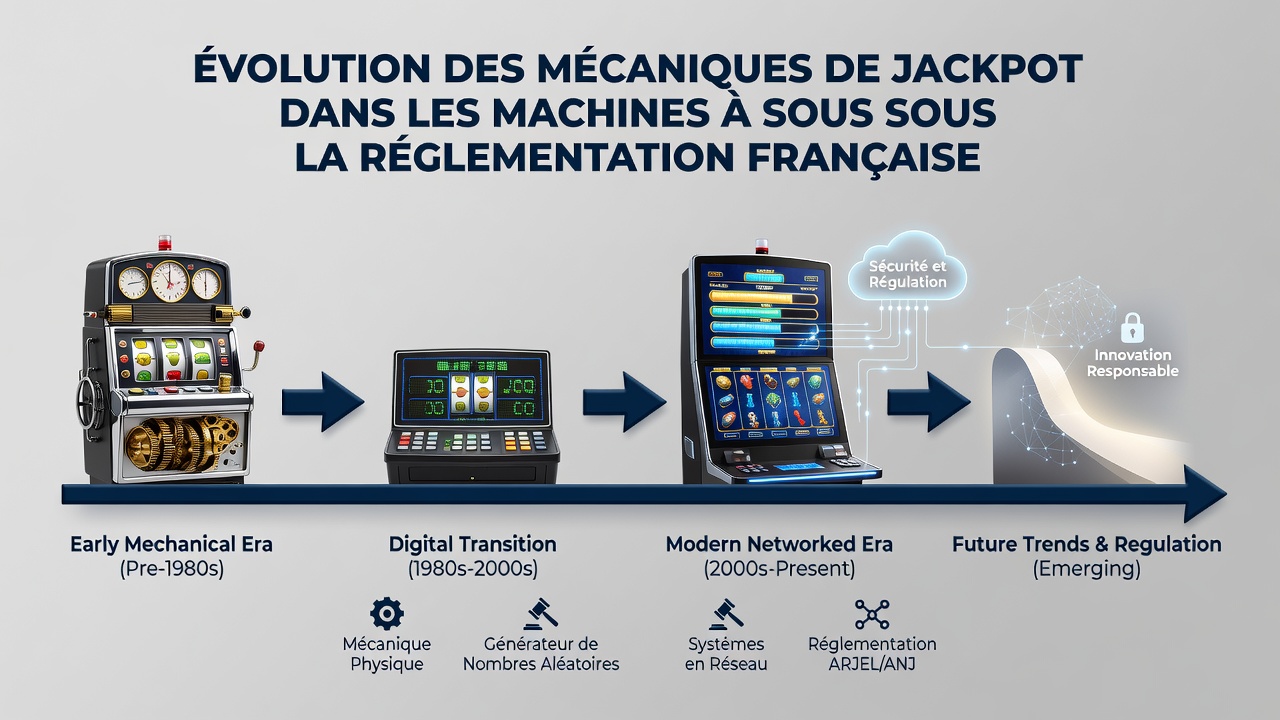
The Evolution of Jackpot Mechanics in Slot Machines Under French Gaming Regulations
French gaming regulations have shaped jackpot mechanics in slot machines through a series of legislative updates that began in the early 20th century and accelerated after the legalization of online gambling in 2010. Observers note that land-based casinos operated under strict oversight from the Ministry of the Interior until the creation of the Autorité Nationale des Jeux in 2020, which consolidated authority over both physical and digital formats. Data from regulatory filings shows that initial jackpot structures relied on fixed payouts tied to coin denominations, yet progressive systems emerged in the 1980s as operators sought to attract higher volumes of play while remaining compliant with payout percentage requirements. Regulators introduced mandatory certification for random number generators in the 1990s, which directly influenced how jackpots accumulated and triggered. Studies from French gaming archives reveal that networked progressive jackpots across multiple machines required operators to maintain separate reserve funds to guarantee payouts, a rule that prevented liquidity issues during large wins. Those who've examined compliance records note that contribution rates to progressive pools were capped at specific percentages of bets to ensure transparency and player protection.Early Regulatory Foundations and Mechanical Limitations
Slot machines entered French casinos under decrees dating back to the 1920s, when jackpots consisted of simple fixed amounts displayed on mechanical counters. Authorities required visible payout tables and prohibited any form of hidden accumulation, which limited innovation until electronic components appeared in the 1970s. Researchers have documented how these early rules emphasized verifiable fairness, forcing manufacturers to design visible reel mechanisms that aligned with government inspection protocols.
By the 1980s, electronic slots allowed for larger progressive jackpots linked across casino floors, yet French rules mandated that a percentage of each bet contribute to a reserve pool held in escrow. This structure ensured that even during peak play periods, funds remained available for the advertised top prize. Figures from industry reports indicate that contribution rates typically ranged between two and five percent of total wagers, a standard that balanced operator revenue with regulatory safeguards.
Transition to Digital Platforms and Online Integration
The 2010 online gambling law opened new avenues for jackpot mechanics while imposing additional layers of oversight on digital platforms. Operators had to integrate certified random number generators that fed into both local and shared progressive systems, and regulators required real-time reporting of jackpot levels to prevent manipulation. According to records maintained by the Autorité Nationale des Jeux, these measures reduced discrepancies between advertised and actual prize pools.
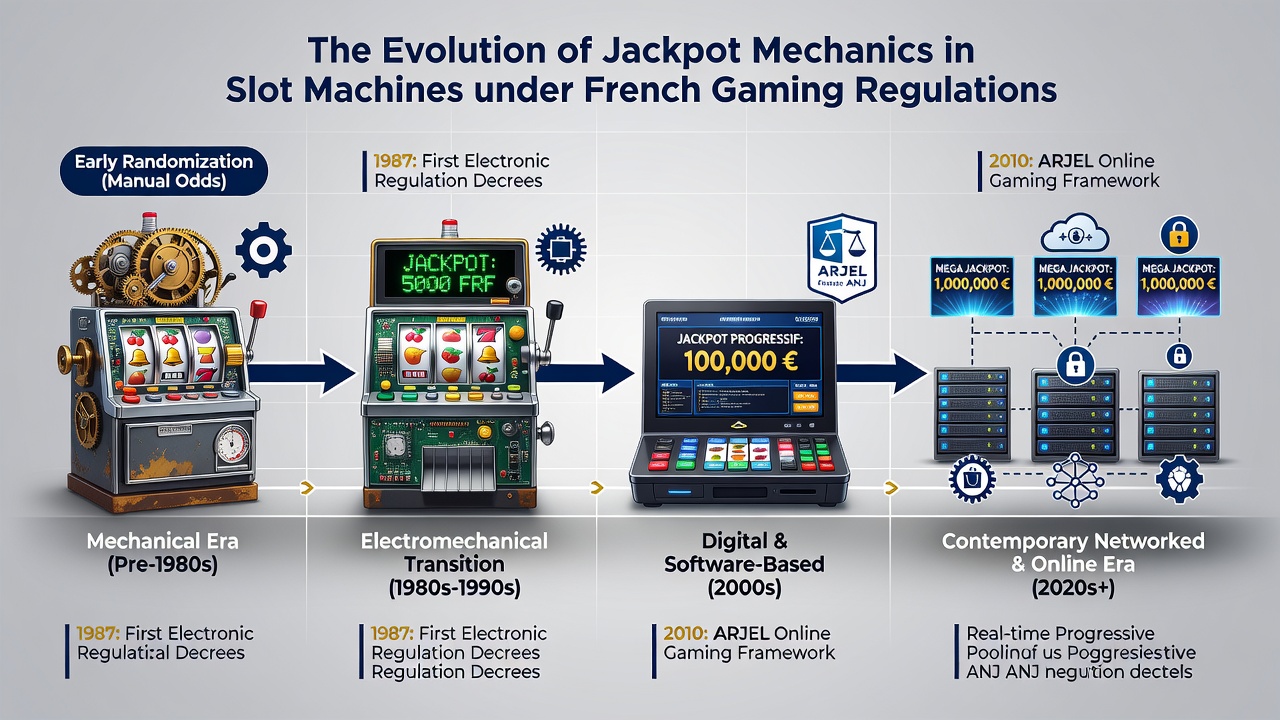
Networked jackpots expanded further in the following decade as operators connected machines across multiple venues. French rules stipulated that cross-site progressives undergo independent audits every quarter, with results submitted to oversight bodies. Data compiled through 2025 shows steady growth in average jackpot sizes, driven by higher player participation yet constrained by mandatory minimum return-to-player percentages that apply to the entire game cycle including bonus features.
Updates Through 2026 and Technical Adjustments
In August 2026, the Autorité Nationale des Jeux issued clarifications regarding the treatment of mystery jackpots and their integration with standard progressive pools. These updates required clearer disclosure of trigger conditions and probability tables, which operators implemented through software patches verified by approved testing laboratories. Compliance data released that month indicated full adherence across licensed platforms within the required timeframe.
Technical standards now emphasize cryptographic sealing of jackpot values to block unauthorized access, a measure that evolved from earlier concerns over remote tampering. Industry analyses reveal that French regulations continue to differentiate between local jackpots confined to single venues and wider progressive systems that span multiple sites, each category carrying distinct reporting obligations. Those monitoring the sector note that these distinctions help maintain competitive balance while protecting player interests.
Current Standards for Payout Verification and Player Protections
Modern jackpot mechanics must incorporate visible meters that update in real time, a requirement rooted in decades of regulatory refinement. Operators submit weekly reports detailing jackpot contributions, triggers, and disbursements, allowing authorities to cross-reference data against certified game logs. Evidence from regulatory summaries shows that this process has minimized disputes over prize calculations since its widespread adoption.
Player protection elements include mandatory session timers and loss-limit tools that interact with jackpot play, ensuring participants receive alerts before exceeding predetermined thresholds. French rules also prohibit any jackpot feature from altering the base game's return-to-player ratio without explicit approval, a safeguard that preserves mathematical integrity across all game modes.
Conclusion
The trajectory of jackpot mechanics under French gaming regulations reflects a consistent emphasis on verifiable fairness, reserve fund integrity, and transparent reporting. From mechanical fixed prizes to digitally networked progressives, each phase incorporated new technical requirements that aligned with evolving oversight structures. Records through August 2026 demonstrate that these layered standards continue to support both operator operations and player safeguards within a tightly controlled environment.